Pedro Wirz
The Horse Who Drank Beer
April 24th – June 12th 2016
Opening Reception : Sunday, April 24th (6 - 8 pm)
Pedro Wirz — artist page · Exhibition archive · Press archive


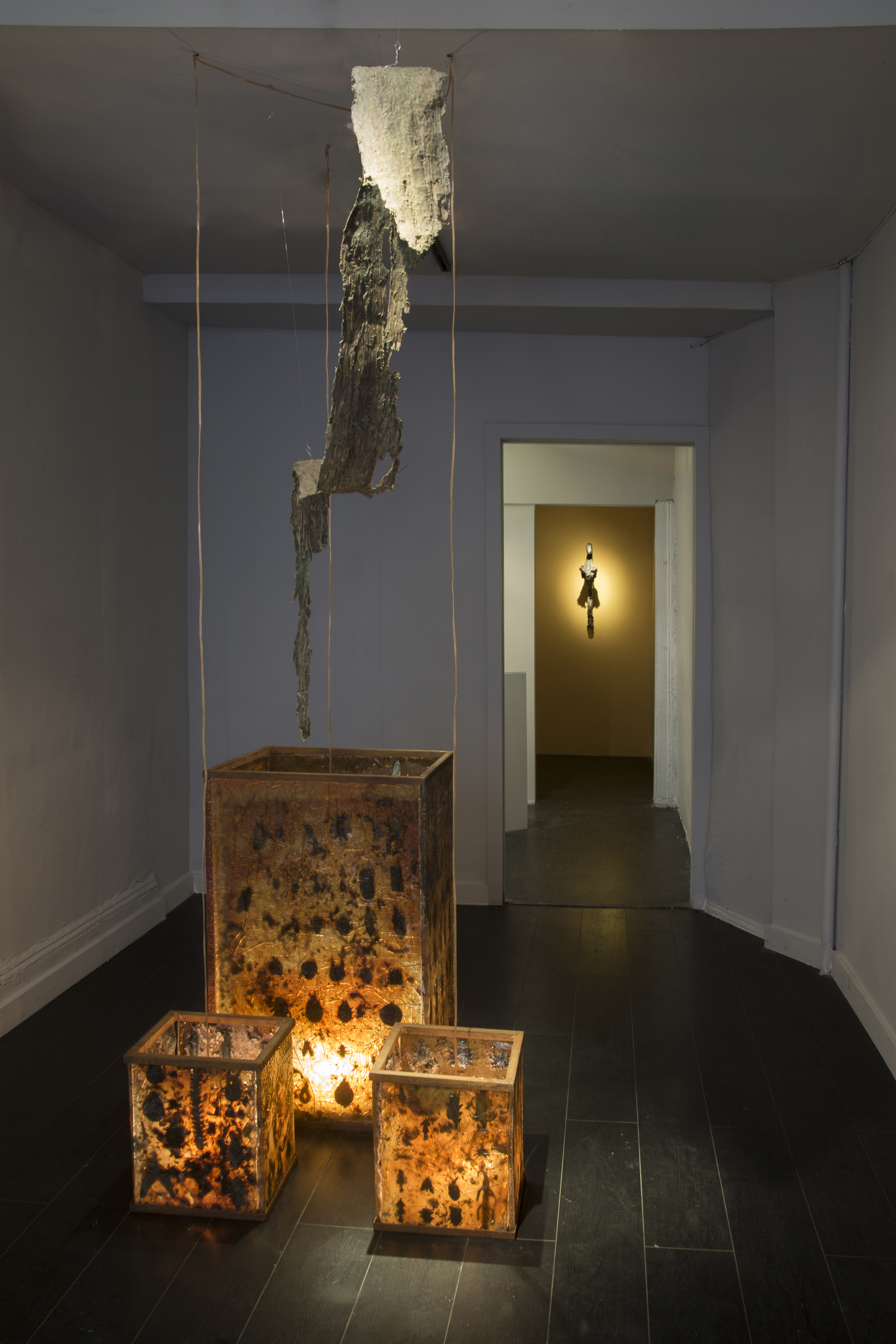


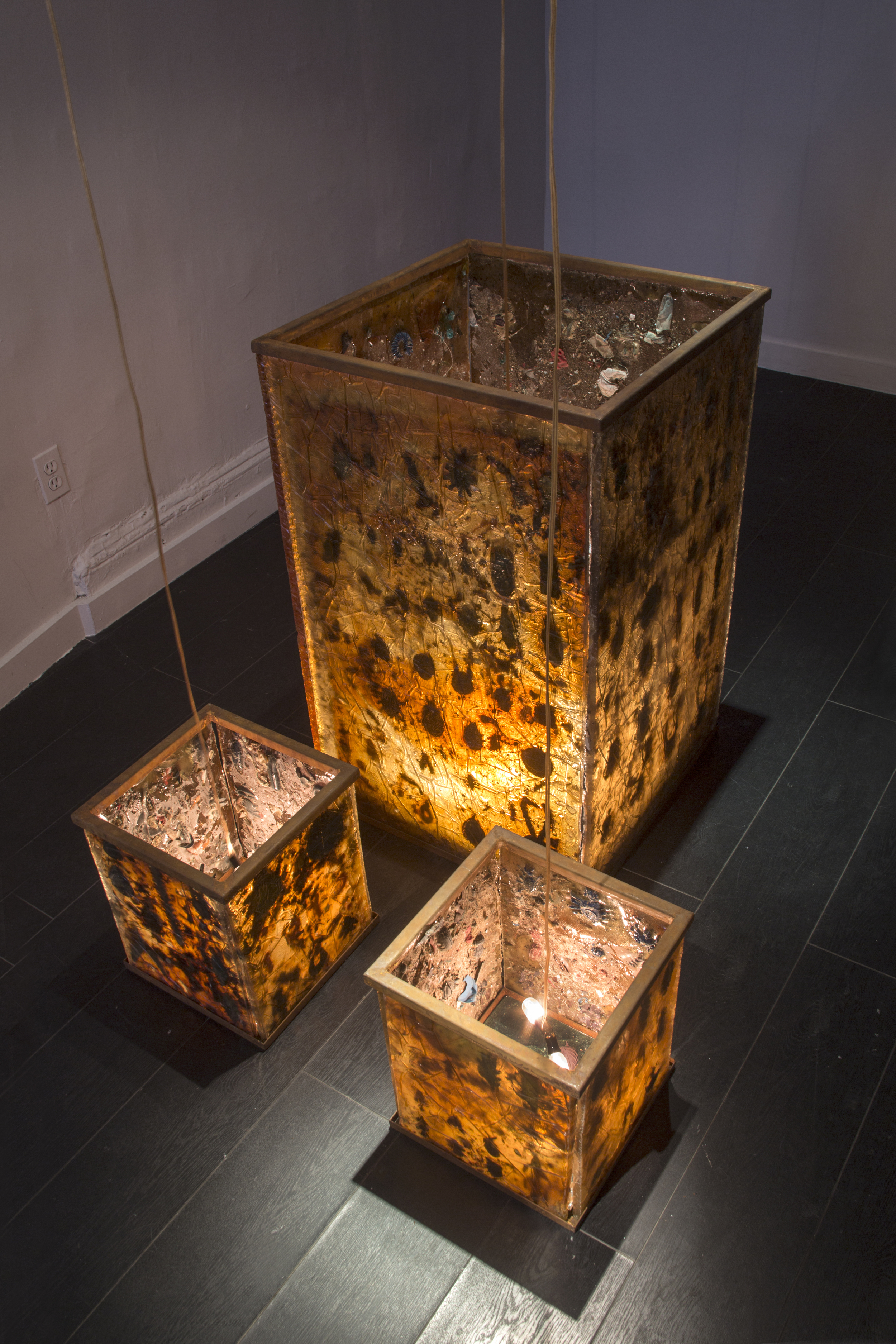
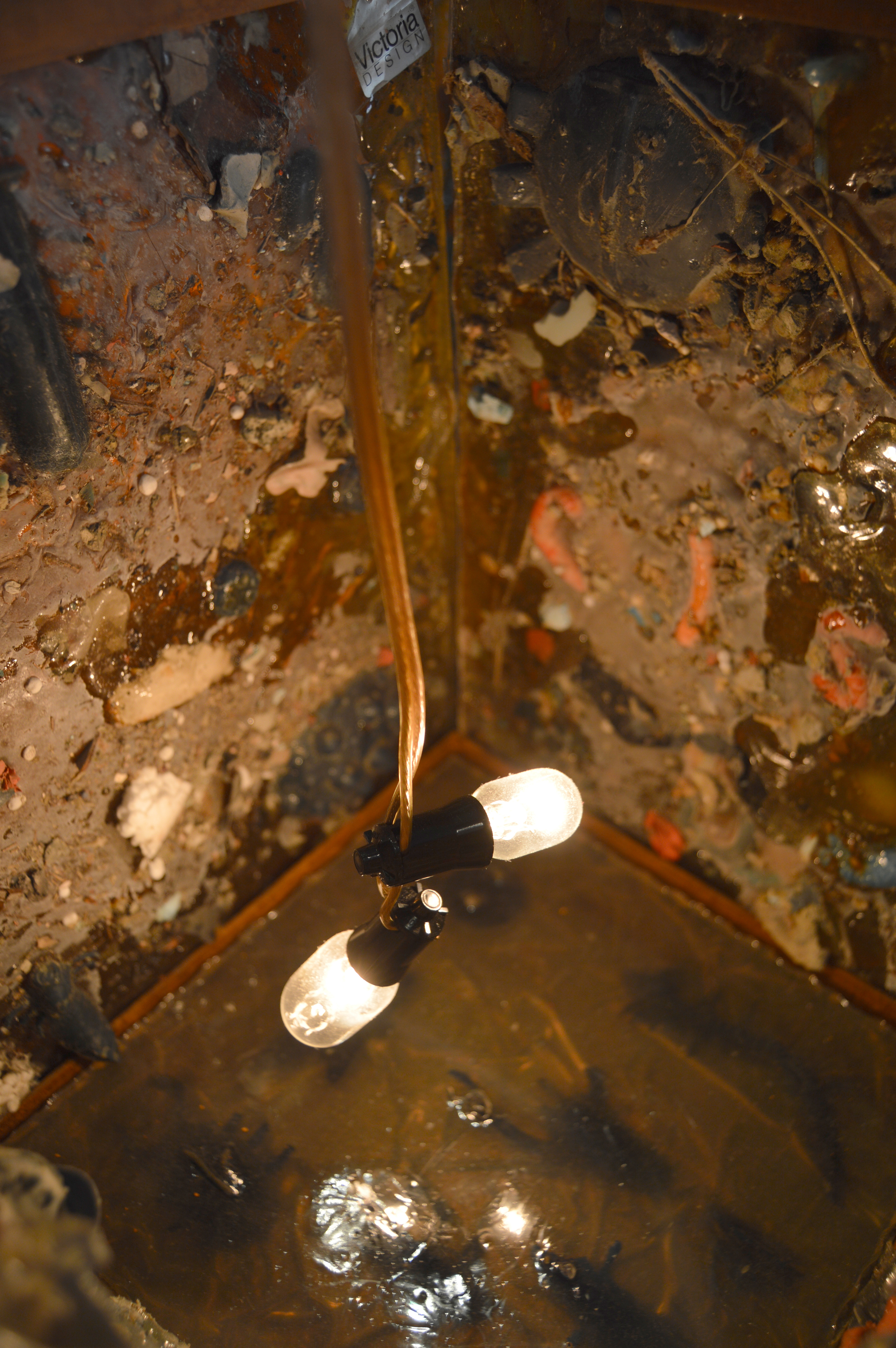




Nascente Seca ("Spring Drought") 2016
Mix media
58 x 58 x 92 cm (23 " x 23 " x 36")
Pedro Wirz presents “The Horse Who Drank Beer” in his US debut at Kai Matsumiya. For the past year, Wirz has focused on decoding oral traditions, mythologies, and legends native to Pindamonhangaba, Brazil, an area in the Paraiba Valley intimately familiar to the peripatetic Swiss-Brazilian artist. In doing so, the artist investigates how myths and legends as recounted by individuals and societies often grow to become determining, self-fulfilling prophecies.
The region's layered, primordial, modern and contemporary landscape has been the site of massive demographic shifts, with ongoing economic, political, and cultural implications as royalty, slaves, indigenous people, merchantmen, and industrialists collide. In his observations of these movements and shifts, Wirz emphasizes collaborations among and between social worlds, by people with a reverence for laughter, and a desire to intuitively explore and materialize the myths and legends of dying cultures and places.
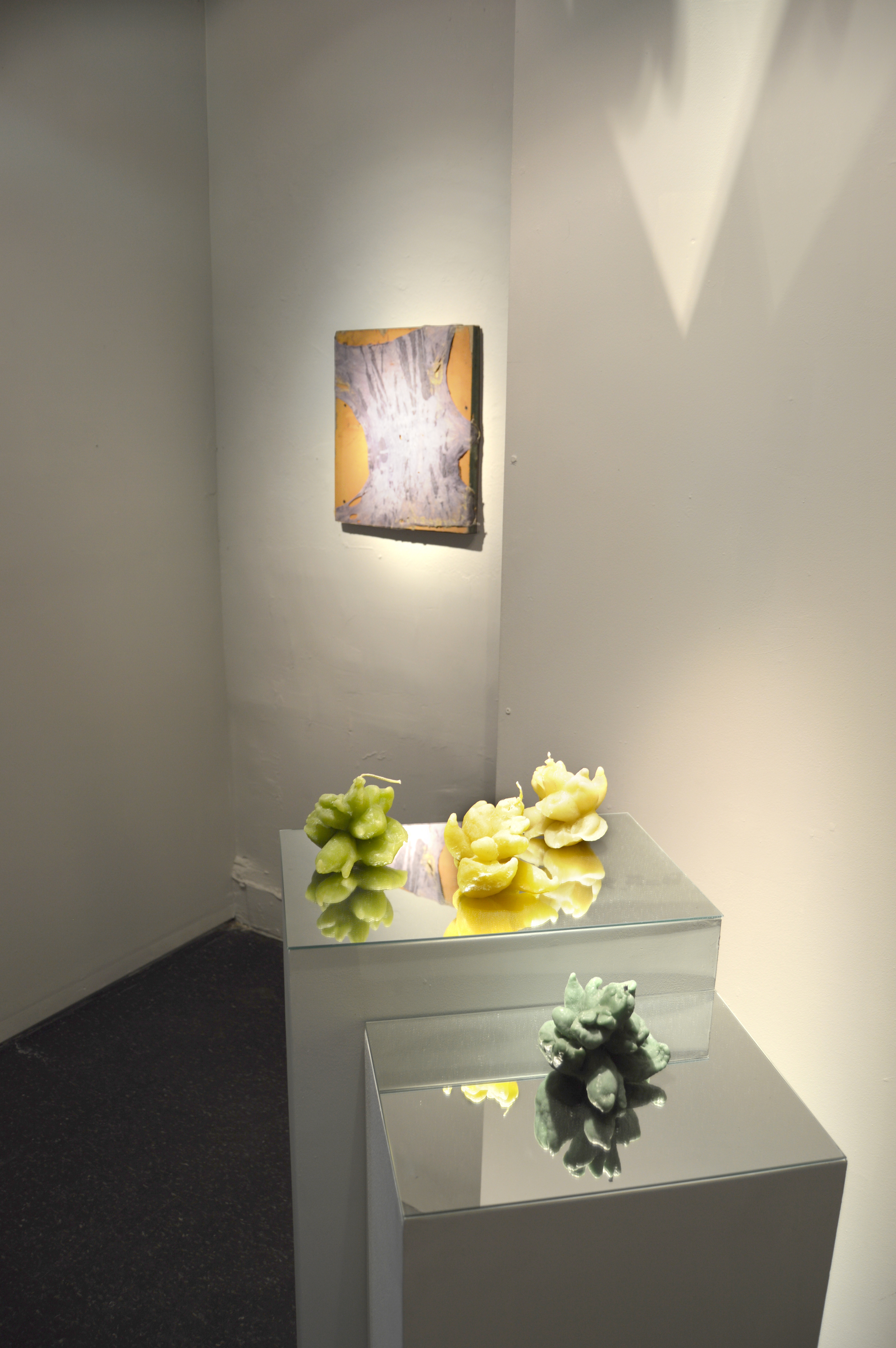
The fruitful abundance of fantastic characters and magical phenomena from the Paraiba, Wirz says, are created from and passed on by a ubiquitous collective consciousness informed by both these rich and varied histories, and its transformative, fluctuating conditions. Wirz's sculptures and wall works ask the viewer to consider this complex interplay among the real, unreal, magical, and enchanted— realms that, while downplayed in contemporary culture, continue to operate in ever-evolving symbolic manifestations.
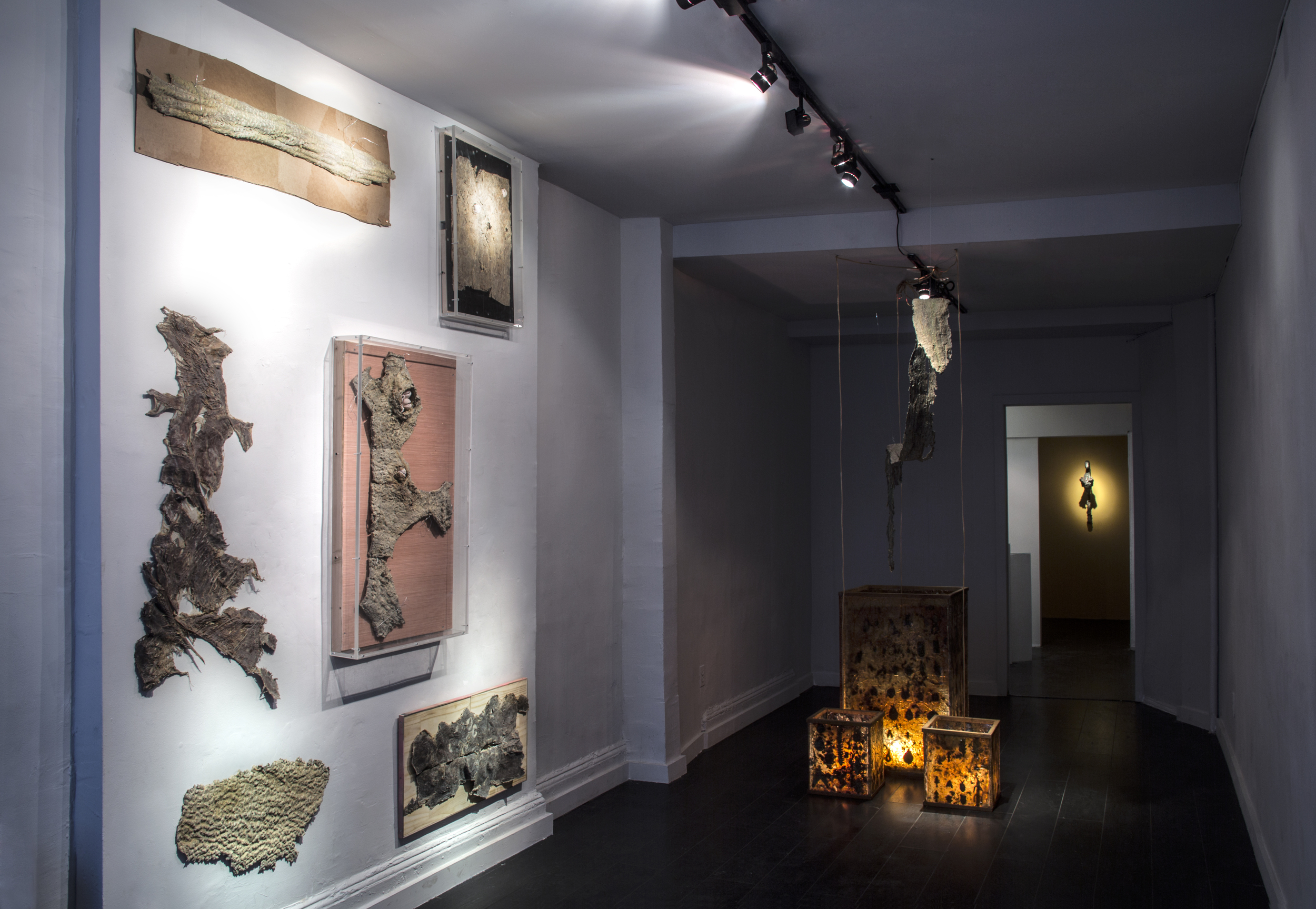
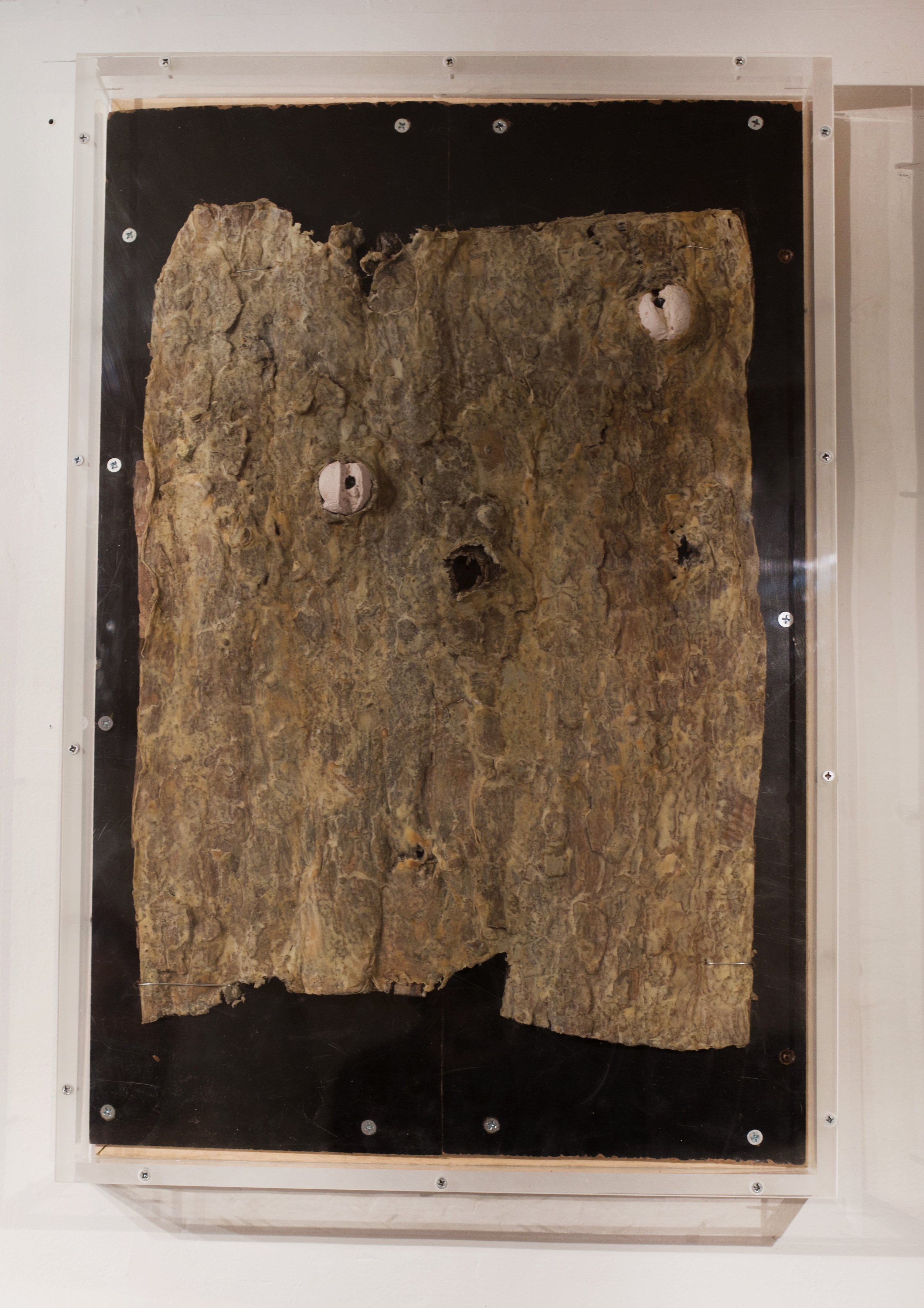
In the sculptures, materials found in nature are manipulated with artificial substances. Surfaces of tree barks, for example, are texturized with coats of latex and acrylic paint generating a moment when the abstract provides a path, and where one thing becomes another. The bark from a tree becomes an alligator or the remnants of taxidermy; limes resemble objects on fire. Imagined insects, arachnids, reptiles, crustaceans, etc. line the insides of light-boxes made from silicon coated with thick latex, and placed upon a bed of epoxy resin which results in an amber-like texture. Though the effect of these materials and processes may seem archaic, to read these sculptures as anti-technological would be a mistake. Technology, in Wirz's work and judgment, informs our perception; it becomes part of the mythos of our dreams and imaginations.
Pedro Wirz lives and works in Sao Paolo, Brazil and Basel, Switzerland. He is currently completing his artist’s residency at the Swiss Institute in Rome, Italy. He received a Bachelor degree of Fine Arts at FHNW HGK Institute of Arts in Basel (Switzerland). He also studied one year at the Staatliche Akademie der Bildenden Künste Stuttgart (Germany)-Institute of Arts under the advisors Rainer Ganahl, Birgit Brenner, and Christian Jankowski. His work has been presented at the Tinguely Museum, Switzerland (2016), CCS Bard Hessel Museum of Art, USA (2015), Künstlerhaus Stuttgart, Germany (2013), Dortmunder Kunstverein, Germany (2013), Palais de Tokyo, France (2013), Galerie Mendes Wood DM, Brazil (2013), Centro Cultural São Paulo, Brazil (2013), Post Studio Tales (Germany) (2012) and Kunsthalle Basel, Switzerland (2011). He was also a resident at Cité international des Arts, Paris (2012) and Resident at Residency Unlimited – 2014 in New York.
The artist would like to kindly thank the support of the following people for making the exhibition possible:
Natacha de Oliveria, Gabriel Lima, Kai Matsumiya, Rainer Ganahl, Sara Roffino, Viola Yeşiltaç, Orazio Battaglia, Stephan Berger, Michele Luminati, Marta Riniker-Radich, Arnaud Besson, Stefan Burger, Kilian Rüthemann, Judith Kakon, Christof Nuessli, Youri Kravtchenko, Cyrill Miksch, Vittorio Visciano, Adrienne Drake, Adam Szymczyk, Natalie Bell, Michele D'Aurizio, Hadi Fallahpisheh, Gina Folly, Maria Victoria, Maron Abujamra Wirz, Ricardo Roberto Wirz, Lucas Wirz and Paulo Wirz.